RWTH Aachen University
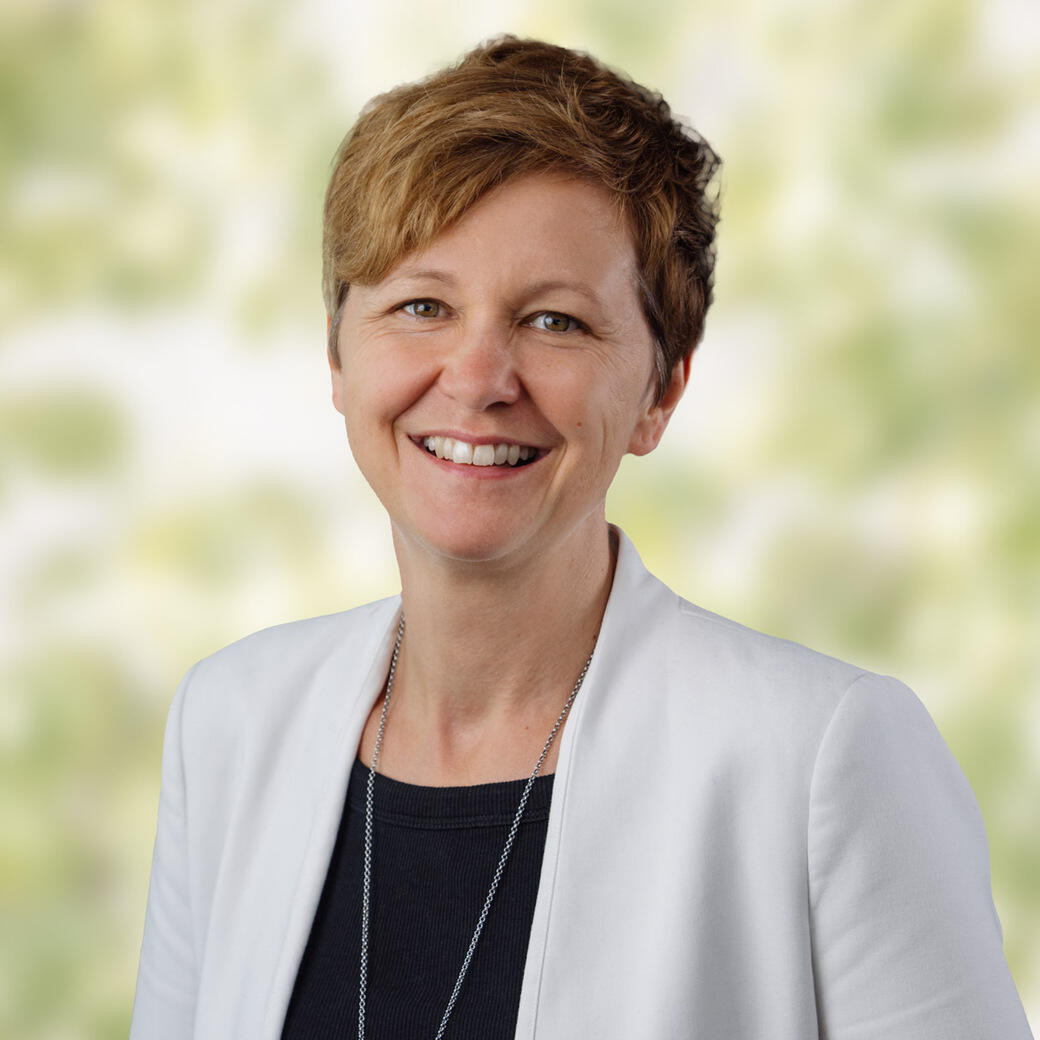
Julia Kowalski is a professor in the Faculty of Mechanical Engineering at RWTH Aachen University and speaker of its profile area Modeling and Simulation Science. She holds a Ph.D. from the Seminar for Applied Mathematics at ETH Zurich. Prior to her current position, she served as a Heisenberg Professor at the University of Göttingen, led a junior research group at the Aachen Institute for Advanced Study in Computational Engineering Science, and worked as an Analytics Specialist at McKinsey & Company. Her research lies at the intersection of computational science, applied math and engineering, with a focus on methods for model-based prediction and decision support, including data-integrated simulation methods for transport-dominated and phase-change processes, Bayesian methods, and digital-twin infrastructures for complex computational workflows. She is an advocate for open science, FAIR principles, and sustainable research software.
Computational Science and Engineering (CSE) integrates engineering, applied mathematics, and computer science to enable model-based design, knowledge generation, and decision support. While CSE has become a key enabler of sustainable products and operations, sustainability is still often treated as an afterthought in computational method development. This talk reflects on sustainability as a core design principle for CSE—one that aligns naturally with scientific relevance, long-term usability, and enduring research value. Drawing on representative examples, we present a holistic perspective spanning resource consumption, digital infrastructure, and organizational practices. We examine how these aspects interact in modern computational research and conclude with directions for impact through sustainable CSE.
EPFL
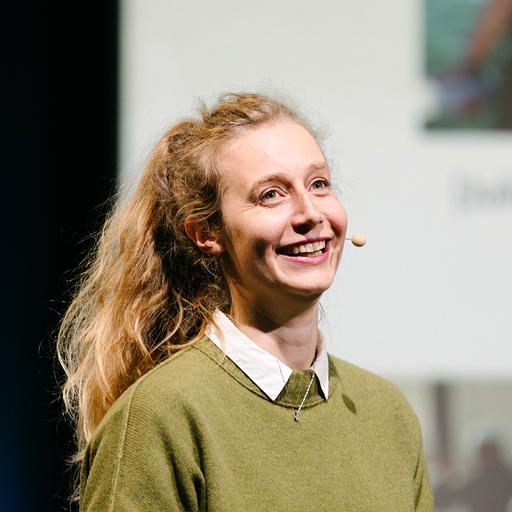
Zoë Holmes received in 2015 her MPhil degree in Physics and Philosophy from the University of Oxford. In 2016 she obtained her MRes (Master of Research) from the Imperial College London, where in 2019 she got her PhD in quantum thermodynamics. In 2020 she started as a Postdoctoral Researcher at Los Alamos National Laboratory (USA) working on quantum algorithms and quantum machine learning. In 2021 she became the Mark Kac Fellow at Los Alamos National Lab. Since August 2022 she is Tenure Track Assistant Professor of Physics at EPFL where her research ranges from quantum algorithms and quantum learning theory to classical methods to simulate quantum systems.
Quantum computing progress depends as much on software as on hardware. In this keynote, we’ll start with a practical view of how high-quality code supports the development and use of quantum devices—through simulation, compilation, verification, benchmarking, and control. We'll also stress the value of state of the art classical methods to delineate where a quantum computer is genuinely required, versus where well-designed classical software is the right (and often faster) choice. We will then zoom in on PauliPropagation.jl, a Julia package we have been developing for efficiently simulating quantum circuits. We will outline the core abstractions and implementation details in the package, and what problems it is meant to make easy. A central thread will be "why Julia". Beyond performance, Julia lets us offer a fully extensible package with custom gates, data structures, and evolving types. We’ll end with an honest account of building Julia tools as a scientist: what has worked well, what has been surprisingly hard, and what we have learned about presenting research software to a community that often defaults to Python expectations.
Black Hole Initiative, Harvard University
Paul Tiede is a computational radio astronomer and data scientist interested in black hole physics. He is a research associate at the Black Hole Initiative at Harvard University and the chief data scientist for the Black Hole Explorer project. Previously, Paul was a postdoctoral fellow at the Center for Astrophysics | Harvard & Smithsonian, and received his Ph.D. from the University of Waterloo and Perimeter Institute in 2021. Within Julia, Paul is the lead developer of several radio astronomy packages, including Comrade.jl, and is the co-lead of the EHTJulia software group.
Black holes were once thought to be unobservable. In 2019, the Event Horizon Telescope (EHT) changed that by producing the first horizon-scale image of M87*. That breakthrough was not only an achievement in astronomy, but also in scientific computing: every step, from building a planet-sized telescope to reconstructing the final image, depended on extensive computation. In this talk, I will show how Julia is helping push black hole imaging into its next era. Its combination of speed, flexibility, and composability has made it a core part of the EHT software stack, powering modern workflows for imaging, modeling, and uncertainty quantification. Julia is also helping define the future of black hole astronomy. The Black Hole Explorer (BHEX), a NASA space mission concept, aims to produce the highest-resolution images of black holes ever made, resolving regions of spacetime where light can orbit the black hole itself. In the final part of the talk, I will highlight how Julia will form the foundation of the BHEX analysis pipeline and demonstrate its potential as the primary software platform for a next-generation scientific instrument.
Engineering Fellow, Epic Games
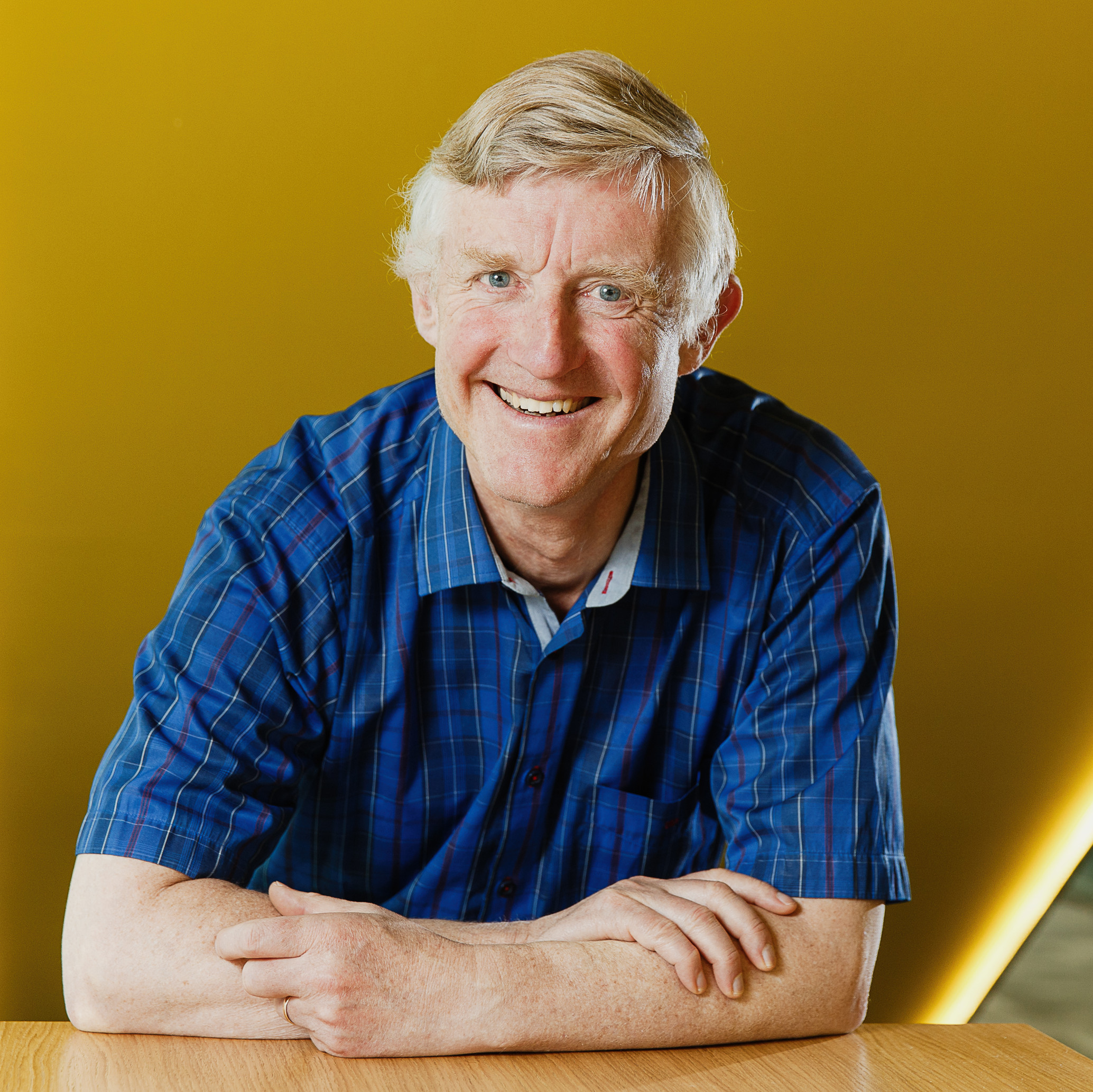
Simon Peyton Jones, FRS, graduated from Trinity College Cambridge in 1980. After two years in industry, he spent seven years as a lecturer at University College London, and nine years as a professor at Glasgow University, before joining Microsoft Research (Cambridge) in 1998. He moved to Epic Games as an Engineering Fellow in 2022. Simon’s main research interest is in functional programming languages, their implementation, and their application. He was a key contributor to the design of the now-standard functional language Haskell, and is the lead designer of the widely-used Glasgow Haskell Compiler (GHC). He has written two textbooks about the implementation of functional languages. He is particularly motivated by direct application of principled theory to practical language design and implementation — that is one reason he loves functional programming so much. Simon is chair of Computing at School, the grass-roots organisation that was at the epicentre of the 2014 reform of the English computing curriculum.
Haskell is an unusual survivor in the Darwinian landscape of programming languages: it is long-lived (36 years old), yet not mainstream; it is both a research platform and a production tool; it pushes the boundaries of what you can do with static types; and (anecdotally) it inspires joy as well as offering utility. In this talk I'll describe how Haskell came to be, and what (in retrospect) I think are its most important contributions. I'll talk about how it has evolved, especially in response to the demands of companies using Haskell in production.